
In 2026, “competitive benefits” doesn’t mean throwing more money at premiums. It means designing a package employees value, while using smarter controls to keep costs predictable—especially as employers face continued pressure from healthcare and pharmacy spending. SHRM highlights cost management as a top benefits theme for 2026.
A PEO-led benefits strategy can help because it combines (1) structured plan design, (2) administrative leverage, and (3) cleaner data and enrollment operations. If you’re positioning a provider, KuddleandCo fits naturally here as the PEO partner that helps companies upgrade benefits and control total rewards spend.
Key Benefits

Win on “value,” not just richer plans
Employees don’t evaluate benefits like actuaries—they evaluate clarity, usability, and relevance. In 2026, benefits trends point toward financial wellbeing, smarter healthcare navigation, and plan designs that help employees actually use what’s offered.
How KuddleandCo helps: package design that balances must-haves (medical, leave alignment, core protections) with high-perceived-value add-ons (financial coaching, lifestyle supports) without ballooning premiums.

Control healthcare cost growth with plan architecture (not guesswork)
Healthcare costs remain a major driver of benefits inflation. SHRM has reported employers projecting significant healthcare cost increases for 2026, reinforcing why “do nothing” is expensive.
A 2026 PEO strategy usually leans on:
- Tiered plans (so not everyone is forced into the richest option)
- HSA/HRA-compatible designs where appropriate (with strong education)
- Steerage + navigation (help employees choose high-quality, cost-effective care)
Eligibility and contribution strategy aligned to talent priorities (not “equal spend per head”)

Treat pharmacy spend like a separate battlefield (because it is)
Even when medical premiums look stable, pharmacy can spike total costs. KFF’s 2025 Employer Health Benefits Survey notes family premiums at $26,993 on average and calls out prescription drug spending as a major contributor for many large firms.
And current employer benefits reporting shows how high-cost drugs (e.g., GLP-1 demand) are forcing employers to rethink coverage strategies.
What top PEO programs do in 2026:
- tighter formulary and prior-authorization governance (where permitted)
- specialty drug management programs
- clinical navigation and “right care” incentives
- transparent reporting on pharmacy drivers (not just “your renewal went up”)

Improve competitiveness with “smart add-ons” (low cost, high impact)
Employers are expanding leave policies as a retention lever, and broader benefits trends point toward personalization and support for different life stages.
High-impact, controlled-cost options include:
- financial wellness (budgeting tools, coaching, education)
- voluntary benefits (employee-paid, employer-negotiated access)
- caregiver supports and flexible leave structures (with clear eligibility rules)
- mental health access improvements via navigation and EAP modernization
KuddleandCo angle: “competitive packages” built from modular choices, not across-the-board enrichment.

Reduce the “hidden overpay”: admin errors and low utilization
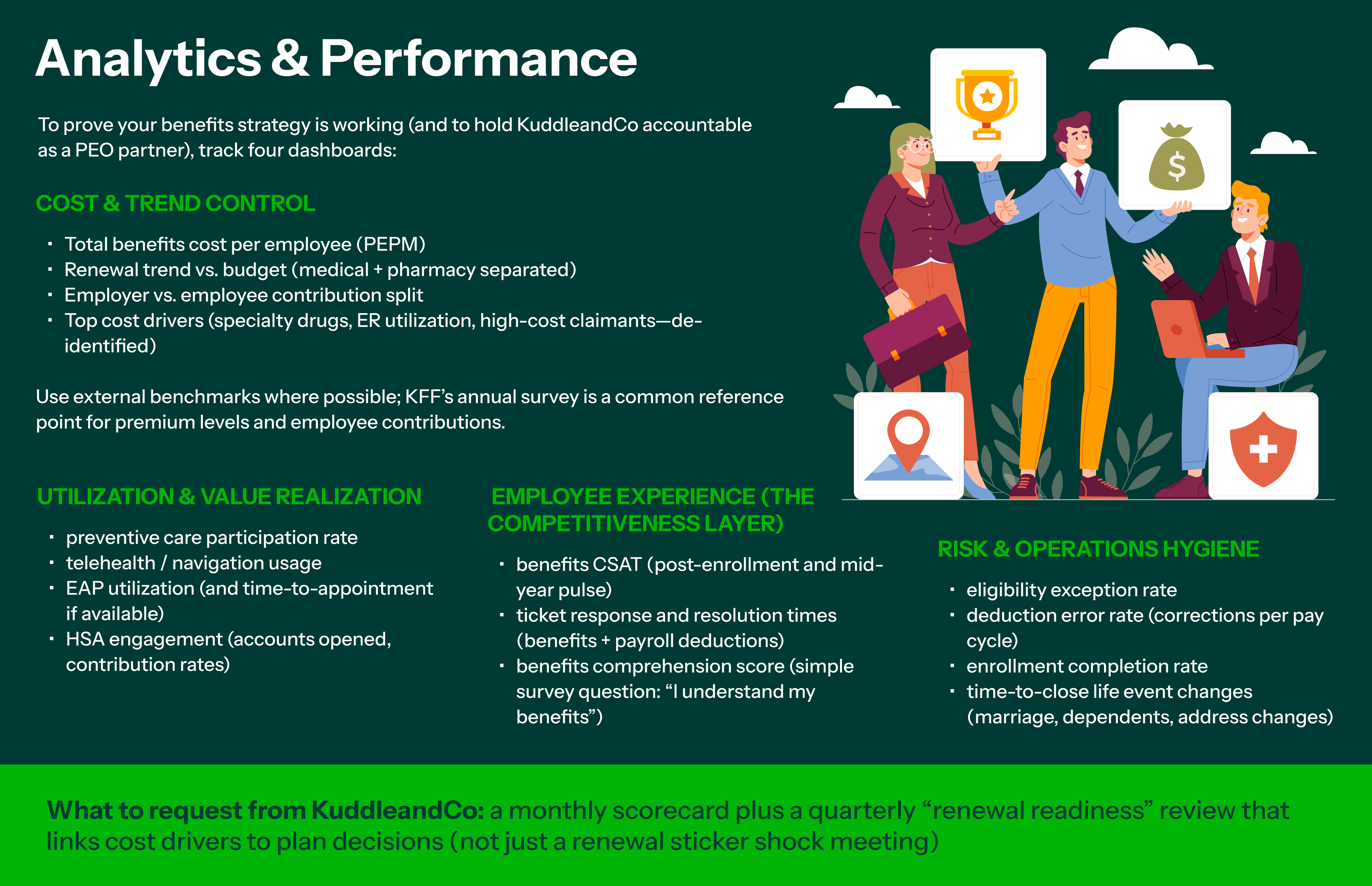
A benefits package can be generous and still underperform if employees don’t understand it—or if deductions and eligibility are messy. This is where PEO operations matter: clean enrollment workflows, eligibility controls, payroll alignment, and better communication.
In practice, “competitive without overpaying” often means spending the same money more effectively by improving adoption and reducing rework.

Conclusion
In 2026, the best PEO benefits strategy is not “bigger benefits.” It’s better benefits engineering: plan architecture, pharmacy governance, and high-value add-ons that improve recruitment and retention—without surrendering cost control. Cost management continues to dominate benefits planning conversations, and credible benchmarks show premiums remain high.
Position KuddleandCo as the PEO partner that helps companies deliver competitive packages without overpaying by combining:
- smarter plan design,
- cleaner administration,
- and reporting that ties spend to outcomes.