
In 2026, businesses scaling across multiple regions are increasingly relying on PEO (Professional Employer Organization) partnerships to manage HR, compliance, and payroll operations. But one of the most important—and often underestimated—decisions is choosing the right pricing model.
The two dominant structures remain:
- Per-Employee (PEPM) pricing
- Percentage of payroll pricing
For growth-oriented companies like KuddleandCo, the choice directly impacts cost predictability, scalability, and long-term workforce strategy.

Per-Employee (PEPM) Pricing Model
How It Works
You pay a fixed monthly fee per employee, regardless of salary level.
Why Companies Choose It
- Predictable budgeting
- Fixed cost per headcount simplifies forecasting
- Better for high-salary teams
- Costs don’t scale with compensation increases
- Operational clarity
- Easy to compare across providers and countries
Limitations
- Can become expensive for large headcount teams
- Less flexible for seasonal or variable workforce models
- Doesn’t reflect payroll complexity differences across roles
Best Fit
- SaaS companies
- Sales-led organizations (like KuddleandCo)
- Teams with mid-to-high compensation structures

Percentage of Payroll Model
How It Works
The PEO charges a percentage of total gross payroll (typically including salaries, bonuses, and commissions).
Why Companies Choose It
- Scales with compensation levels
- Costs rise or fall naturally with payroll
- Lower cost for lower-salary markets
- Efficient for offshore or entry-level teams
- Aligned provider incentives
- Providers benefit from payroll growth stability
Limitations
- Less predictable monthly costs
- Becomes expensive for high-performing sales teams with large commissions
- Difficult to forecast during rapid scaling phases
Best Fit
- Labor-intensive operations
- Entry-level or offshore workforce-heavy companies
- Organizations with stable compensation structures
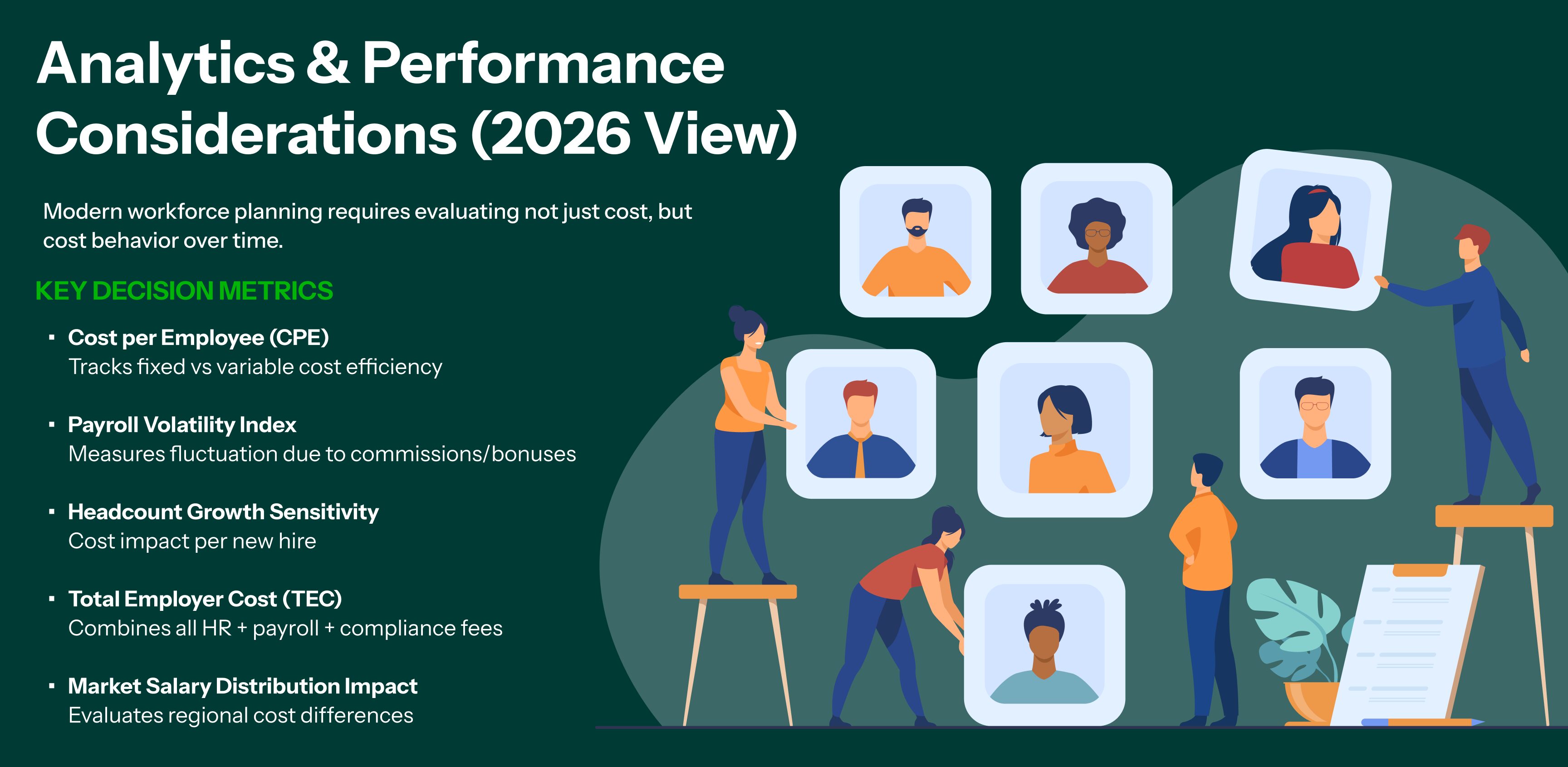
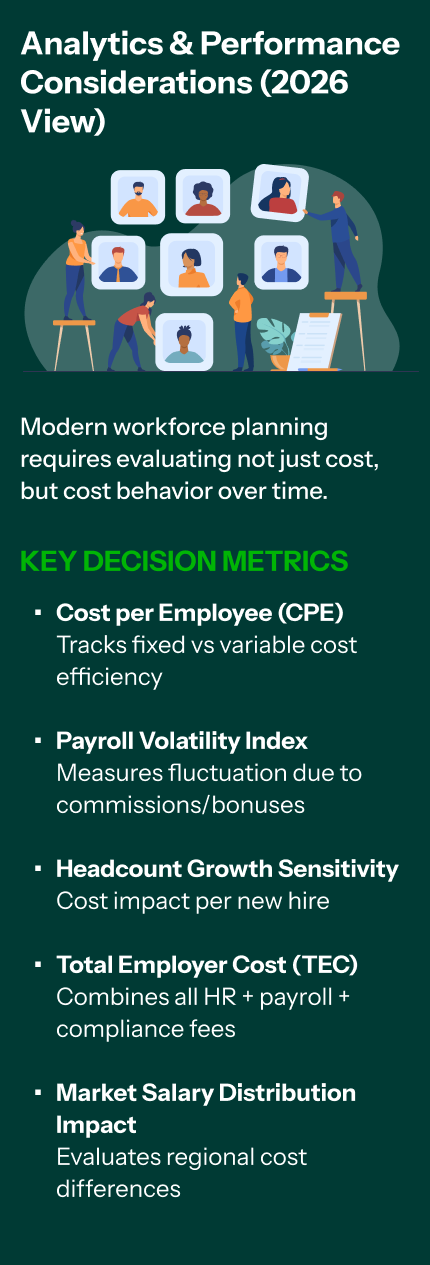
Strategic Insight for KuddleandCo
For KuddleandCo, which typically operates in sales-driven, performance-based workforce environments, the PEPM model often provides stronger financial control:
- Sales roles tend to have variable compensation → % payroll becomes unpredictable
- PEPM ensures stable HR operating costs during rapid expansion
- Easier to model ROI per sales hire across new markets
However, a hybrid approach is emerging in 2026:
PEPM for core teams + % payroll for variable/commission-heavy regions
This blended structure allows companies like KuddleandCo to balance predictability with flexibility as they scale globally.
Conclusion
In 2026, there is no universal “best” PEO pricing model—only the best model for your workforce structure.
- Choose PEPM if you value stability, predictability, and sales-driven scalability
- Choose % of payroll if your workforce is cost-sensitive and compensation is relatively stable
- Consider a hybrid model if your organization operates across diverse global labor structures
For KuddleandCo, the strategic advantage comes from aligning pricing structure with workforce behavior—not just cost preference. The right model reduces financial friction and enables faster, more confident global expansion.
References
- International Labor Organization. Employment promotion
- OECD. Employment
- Wordl Bank Group. Development Topics