
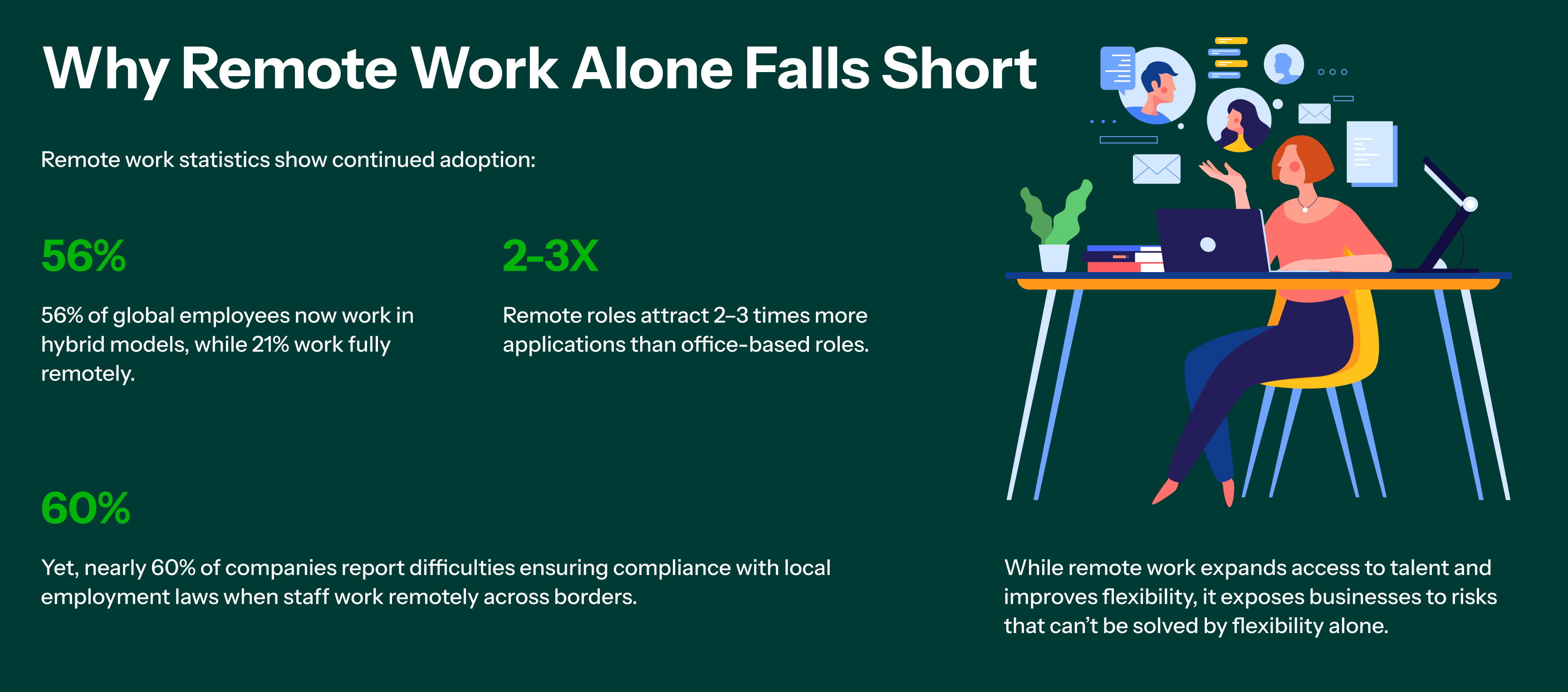
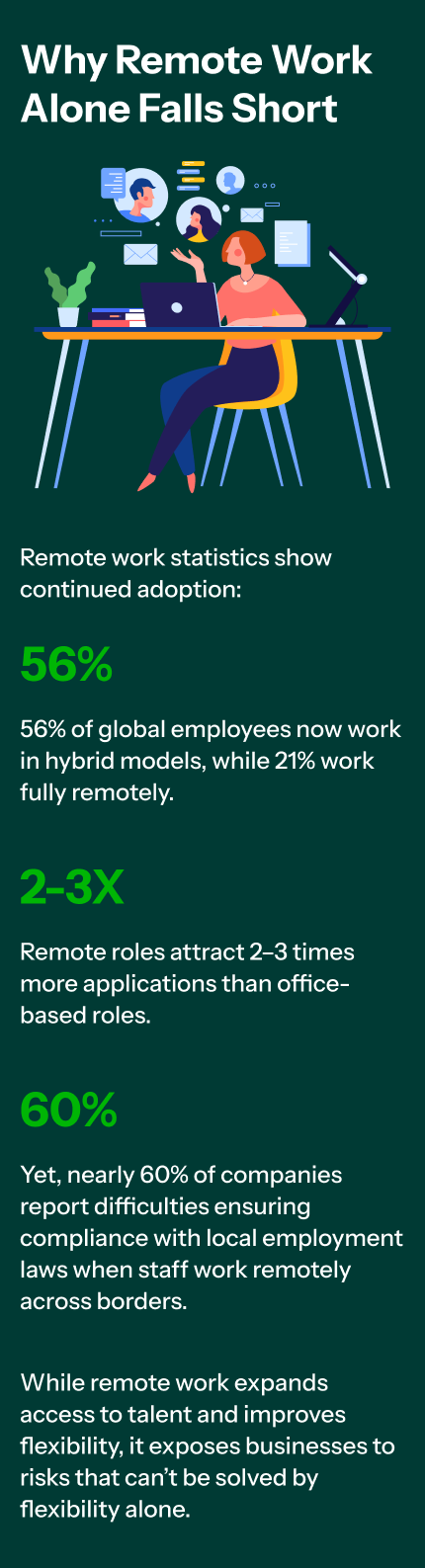
Remote work has become a standard expectation in 2026, but it’s no longer a competitive differentiator on its own. Businesses that fail to pair flexibility with robust legal employment infrastructure risk compliance violations, operational inefficiencies, and employee dissatisfaction. Companies like KuddleandCo are leading the way in helping organizations combine remote work freedom with secure, compliant employment frameworks.
What Legal Employment Infrastructure Solves
Legal employment infrastructure includes systems and processes that ensure:
- Correct employment classification (employee vs. contractor)
- Payroll and statutory compliance in multiple jurisdictions
- Employee benefits administration according to local law
- Adherence to labor regulations and protections
Without these systems, businesses face fines, lawsuits, and reputational damage — even if they offer fully remote work.
Key Drivers Making Infrastructure a Priority in 2026

Global Hiring & Compliance Complexity
Remote work often spans countries. Each jurisdiction has unique employment laws, taxes, and benefits requirements. For example:
- Companies hiring remotely in the EU must comply with GDPR and social security mandates.
- U.S. states have different wage laws, minimum leave entitlements, and tax rules.
Proactive infrastructure ensures compliance everywhere, mitigating costly errors.

Payroll Accuracy & Legal Protection
Accurate payroll is more than paying on time:
- Misclassification or incorrect deductions can cost a company thousands or even millions in penalties.
- A proper system automates statutory contributions and tax filings, reducing errors and protecting both employer and employee.
Partnering with KuddleandCo allows businesses to streamline these processes globally.

Employee Confidence & Retention
Employees increasingly prioritize job security alongside flexibility:
- 73% of remote workers consider benefits, contracts, and compliance as key to staying at a company.
- Companies offering compliant employment structures see up to 50% lower turnover.
Remote work perks alone aren’t enough to attract and retain top talent without legal certainty.
Key Benefits of Legal Employment Infrastructure
-
Reduced Compliance Risk
Avoid fines, back pay claims, and audits across jurisdictions.
-
Efficient Global Payroll
Automate complex calculations for multi-country teams.
-
Improved Talent Attraction
Offer legally compliant contracts and benefits that appeal to remote talent.
-
Operational Scalability
Expand workforce globally without setting up local entities.
-
Peace of Mind
Focus on growth, knowing your workforce is secure and compliant.
Analytics Insight: Compliance + Remote Work = Growth
Data shows:
- Companies with robust employment infrastructure grow 1.5x faster internationally than those relying solely on remote work.
- Properly structured legal systems reduce employee disputes by 35–40%.
This demonstrates that infrastructure directly contributes to business resilience and scaling.
Conclusion
Remote work is no longer a unique advantage — it’s the baseline. In 2026, the differentiator is how legally sound and structured a company’s employment model is. Legal employment infrastructure reduces risk, ensures payroll accuracy, strengthens employee trust, and enables global scalability.
Companies embracing this approach, like KuddleandCo, can confidently expand, hire top global talent, and turn remote work flexibility into a real strategic advantage. Without it, remote work alone leaves businesses exposed to legal and operational pitfalls.