
HR outsourcing in 2026 is no longer just “someone else runs payroll.” It’s evolving into a strategic workforce control layer—a way to manage risk, speed, cost, and talent outcomes with tighter operational governance.
Three forces are pushing this shift:
- Regulatory complexity is expanding, especially around AI use in hiring and workplace decisions.
- Talent scarcity is still persistent, with 72% of employers reporting difficulty filling roles in ManpowerGroup’s 2026 survey.
- Work is being redesigned for the human–machine era, requiring new workforce planning and operating models.
For growth-minded companies, this is where partners like KuddleandCo fit naturally: not just handling HR tasks, but helping leaders build repeatable workforce control that can scale.
Key Benefits

Outsourcing is becoming “operational control,” not task delegation
The 2026 trend is shifting from transactional support (basic admin) to transformational outsourcing—providers that help manage outcomes across compliance, workforce structure, and employee lifecycle execution.
What this looks like in practice:
- standardized onboarding + documentation
- consistent policy execution across teams/locations
- defined approval workflows (offers, comp changes, terminations)
- measurable service levels (SLAs) instead of “email HR”

Compliance is getting harder—especially with AI in HR
As 2026 begins, HR teams face a growing patchwork of AI-related hiring/workplace regulations at the state level in the U.S., adding another layer of governance to recruiting and decision-making.
Outsourcing partners increasingly help by:
- formalizing hiring workflows and documentation
- setting rules for tool use, data handling, and audit trails
- reducing “random tool adoption” across teams

Talent competition is pushing companies to buy speed + consistency
When 72% of employers say they’re struggling to fill roles, execution speed and candidate experience are not optional.
HR outsourcing (PEO, EOR, or hybrid models) is being used to:
- reduce hiring friction (faster offers, faster onboarding)
- strengthen benefits and employee experience execution
- keep internal HR lean while scaling headcount

Workforce models are changing, and HR must be more “strategic”
Gartner’s 2026 talent management outlook highlights structural shifts—like declining entry-level roles, HR shifting recruiting capacity inward, and retention becoming a major productivity barrier.
That pushes outsourcing into strategic territory: workforce design, internal mobility, retention operations, and manager enablement—not just admin.

A single partner can unify fragmented HR operations
Many companies hit a “vendor sprawl” problem: payroll vendor + benefits broker + compliance counsel + onboarding tool + local contractor agreements. Strategic outsourcing consolidates and standardizes—especially valuable when expanding across regions.
This is a practical positioning angle for KuddleandCo: one operating model, fewer handoffs, better control.

Conclusion
In 2026, HR outsourcing is moving up the value chain: from admin support to strategic workforce control. This change is driven by:
- rising regulatory complexity (including AI rules affecting HR decisions)
- persistent global talent scarcity
- workforce redesign in the human–machine era
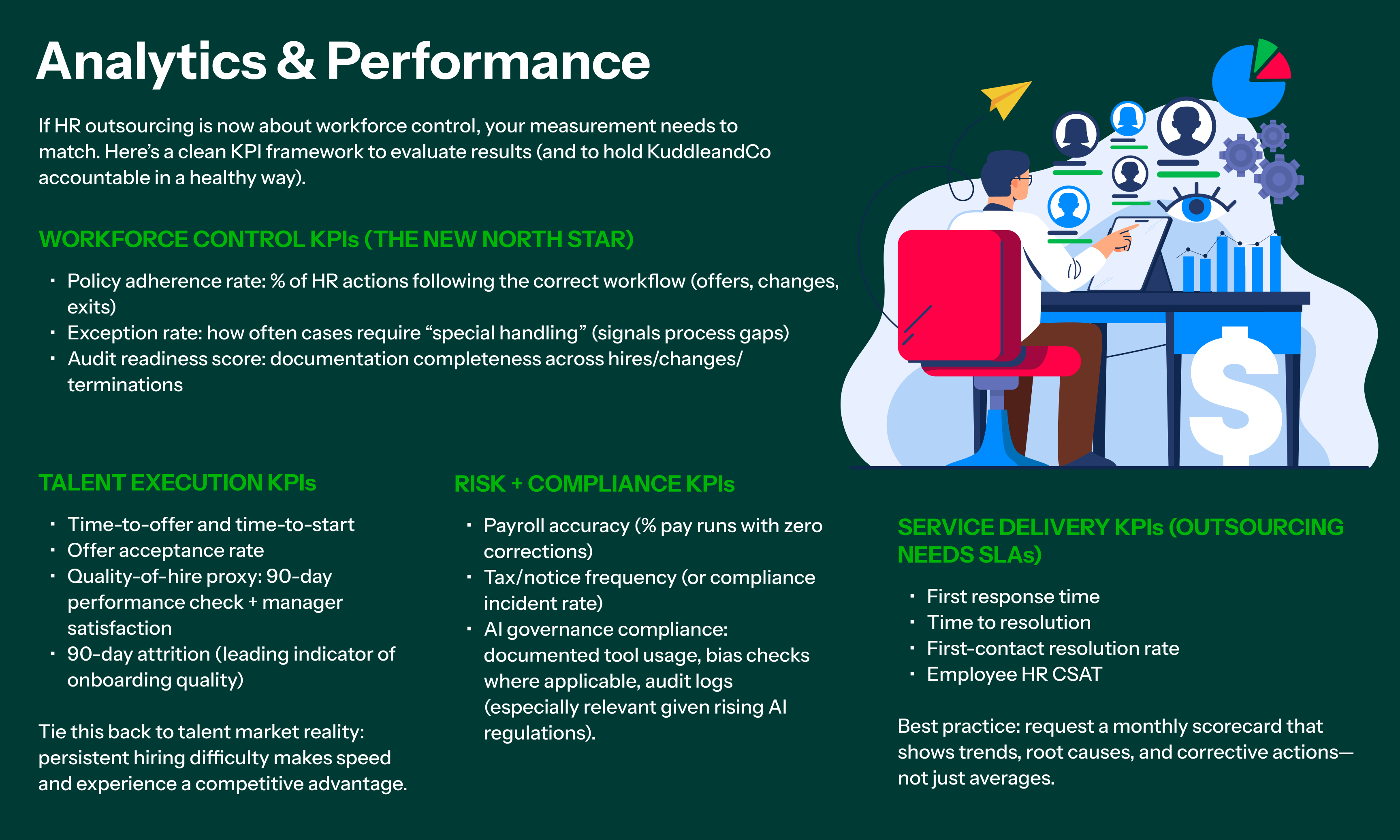
For fast-growth companies, a partner like KuddleandCo should be evaluated not on “what tasks they handle,” but on whether they improve speed, compliance discipline, and measurable talent outcomes—with clear analytics behind it.
References
- SHRM — New Year Brings New AI Regulations for HR (2026)
- ManpowerGroup — 2026 Global Talent Shortage
- ManpowerGroup — 2026 survey press release (72% difficulty filling roles)
- Gartner — Future of Work Trends (Jan 2026)
- Gartner Press Release — Talent Management Trends HR Leaders Should Prepare for in 2026