
In 2026, HR strategy is no longer built around headcount planning and administrative execution alone. It has evolved into a scalability engine for business growth, driven by artificial intelligence, automation, and global workforce models.
This is where modern workforce partners like KuddleandCo play a key role—helping organizations integrate AI-driven HR systems with scalable employment structures such as PEO (Professional Employer Organization) and EOR (Employer of Record).
Key Benefits of a Scalable AI-Driven HR Strategy
Faster Organizational Scaling
AI automates core HR processes such as:
- Candidate screening
- Onboarding workflows
- Payroll setup
- Document verification
This allows companies to scale teams rapidly without increasing HR headcount at the same rate.

Global Hiring Without Structural Barriers
With EOR-enabled systems, businesses can:
- Hire talent in multiple countries instantly
- Avoid establishing local legal entities
- Maintain compliance across regions
This removes one of the biggest constraints in global expansion.

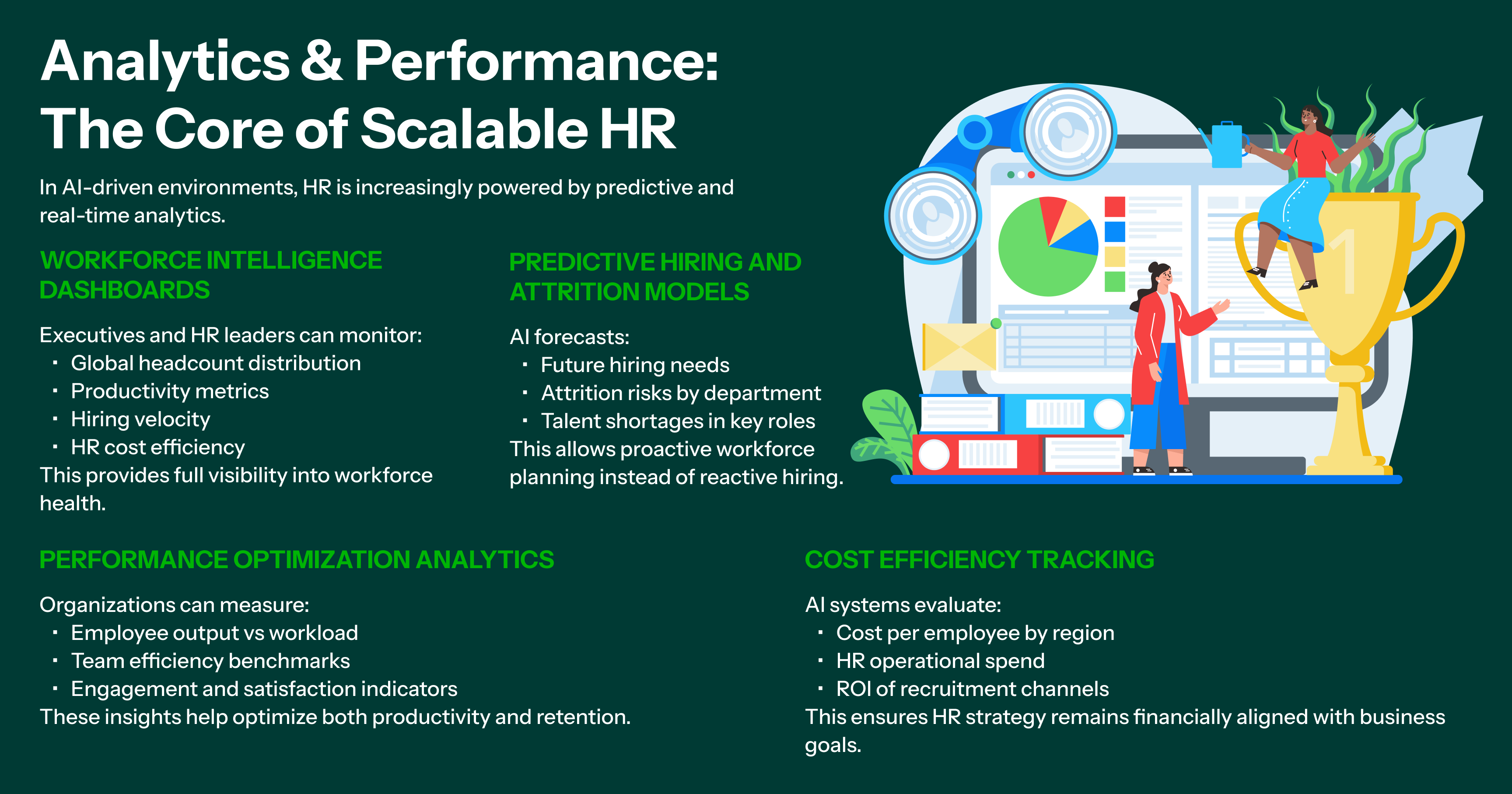
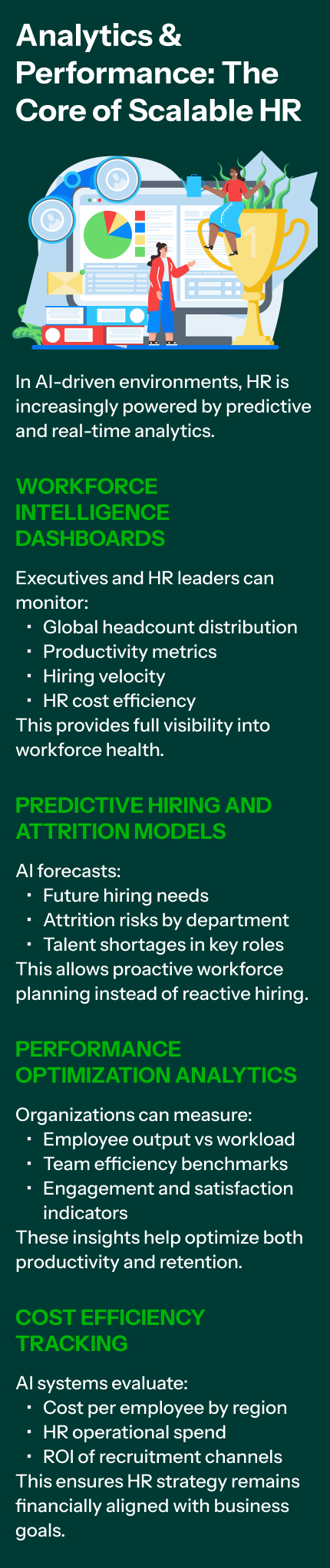
Data-Driven Workforce Planning
AI provides real-time insights into:
- Workforce demand forecasting
- Skill gap identification
- Hiring pipeline efficiency
- Cost-per-hire optimization
This enables HR to align directly with business growth targets.

Improved Employee Lifecycle Management
Scalable HR systems streamline:
- Onboarding and training
- Performance tracking
- Internal mobility
- Offboarding processes
This creates a consistent employee experience across all locations.

Reduced Operational Complexity
Automation reduces manual HR workload, allowing teams to focus on:
- Strategic workforce design
- Employee engagement
- Organizational development
Where AI Alone Is Not Enough
While AI enhances HR scalability, it cannot operate independently of human and structural frameworks.
1. Strategic Workforce Design Requires Human Judgment
AI provides recommendations, but leadership defines long-term workforce direction.
2. Compliance Still Requires Legal Accountability
Labor laws, taxation, and employment classification require structured governance.
3. Cultural and Organizational Alignment
Building cohesive global teams requires human insight into culture, communication, and leadership dynamics.
The Role of PEO and EOR in Scalable HR Strategy
PEO (Professional Employer Organization)
Supports:
- Payroll processing
- HR administration
- Benefits management
- Shared compliance responsibilities
EOR (Employer of Record)
Enables:
- Legal hiring in foreign countries
- Cross-border employment compliance
- Local payroll and tax handling
Together, they allow companies to scale globally without building fragmented HR systems in each country.
Organizations working with KuddleandCo benefit from a unified model where AI-driven HR intelligence is combined with compliant global employment infrastructure.
Designing a Scalable HR Framework for 2026
Intelligence Layer (AI)
- Workforce analytics
- Predictive hiring models
- Performance tracking
Execution Layer (PEO/EOR)
- Payroll and compliance
- Employment contracts
- Global hiring infrastructure
Strategy Layer (Human Leadership)
- Workforce planning
- Organizational design
- Culture and engagement
Conclusion
Building a scalable HR strategy in an AI-driven business environment requires more than automation—it requires integration.
AI delivers speed, intelligence, and predictive capability. PEO and EOR services provide the structural backbone for global compliance and employment execution. Human leadership ensures strategic direction and cultural alignment.
Together, these elements create a scalable HR system capable of supporting rapid global expansion, operational efficiency, and long-term workforce stability.
With support from providers like KuddleandCo, organizations can transform HR into a fully scalable, data-driven, and globally compliant growth engine.